The Science Behind Back Pain: Understanding Your Spine
Back pain is one of the most common health complaints worldwide, affecting people of all ages and backgrounds. To effectively manage and overcome back pain, it's essential to understand the underlying anatomical structures, common causes, and evidence-based approaches to treatment. This article explores the science behind back pain, providing insights that can help you better understand your condition and make informed decisions about your care.
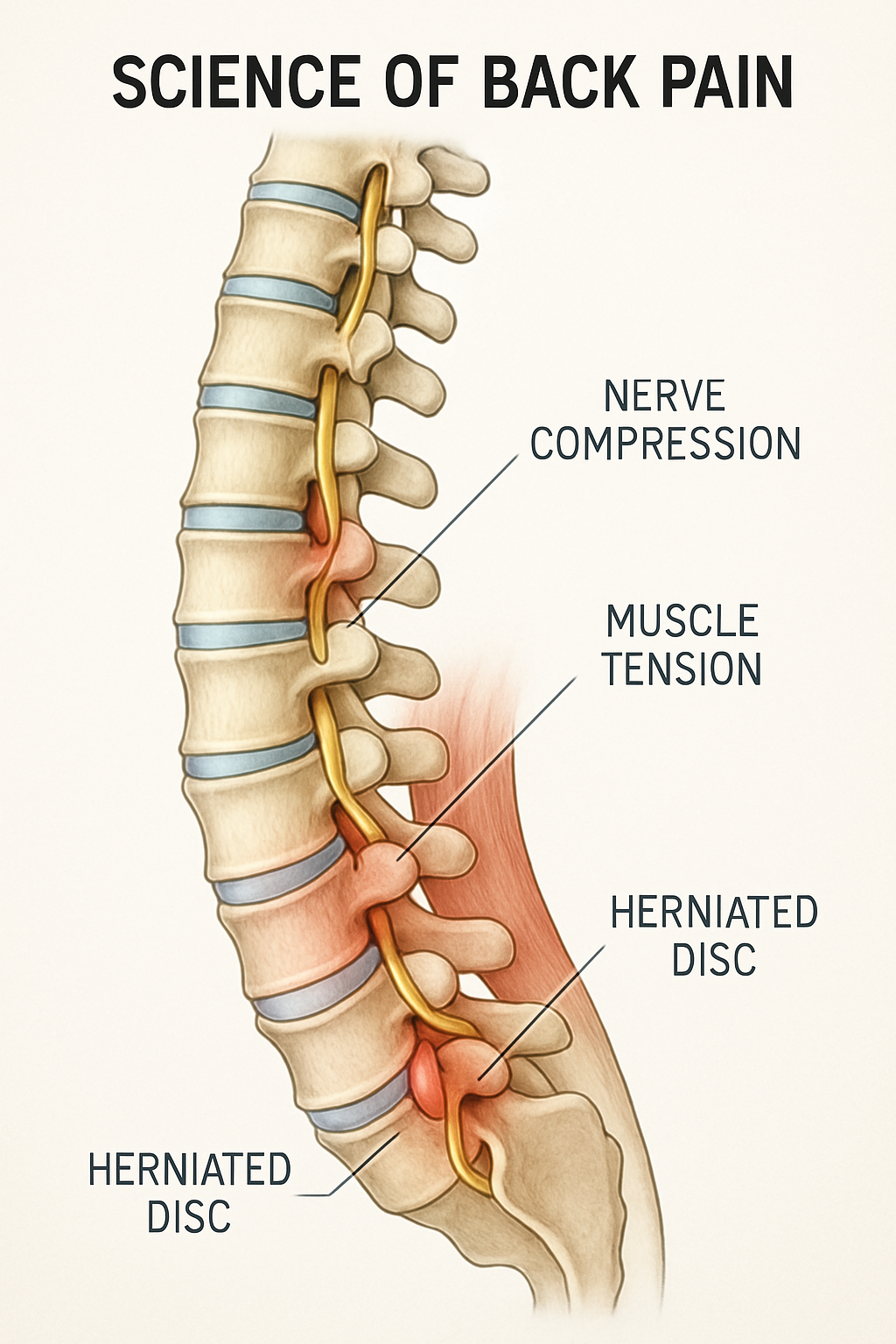
The Anatomy of Your Spine
The human spine is a remarkable structure consisting of 33 vertebrae stacked on top of each other, forming the spinal column. These vertebrae are divided into five regions:
- Cervical spine (C1-C7): The 7 vertebrae in your neck, supporting the weight of your head and allowing for a wide range of motion.
- Thoracic spine (T1-T12): The 12 vertebrae in your mid-back, connecting to your ribs and providing stability to your upper body.
- Lumbar spine (L1-L5): The 5 vertebrae in your lower back, bearing most of your body weight and enabling movement in your torso.
- Sacrum: 5 fused vertebrae forming a triangular bone at the base of your spine.
- Coccyx (tailbone): 4 fused vertebrae at the very bottom of your spine.
Key Spinal Components
- Vertebrae: The bony structures that protect your spinal cord and support your body weight.
- Intervertebral discs: Cushion-like structures between vertebrae that absorb shock and allow for spinal flexibility.
- Facet joints: Small joints that connect vertebrae and enable movement.
- Spinal cord: The main pathway for nerve signals between your brain and the rest of your body.
- Spinal nerves: Nerves that branch off from the spinal cord and transmit signals to specific areas of your body.
- Muscles and ligaments: Provide support, stability, and enable movement of the spine.
Understanding these structures is crucial because back pain can originate from issues with any of these components. For example, a herniated disc occurs when the soft inner material of an intervertebral disc protrudes through a tear in the outer layer, potentially pressing on nearby nerves and causing pain.
Common Causes of Back Pain
Back pain can result from various factors, ranging from acute injuries to chronic conditions. Understanding the potential causes can help in identifying appropriate treatment approaches:
Mechanical Issues
- Muscle or ligament strain
- Herniated or bulging discs
- Degenerative disc disease
- Facet joint dysfunction
- Spinal stenosis (narrowing of the spinal canal)
- Spondylolisthesis (vertebra slippage)
Lifestyle Factors
- Poor posture
- Sedentary behavior
- Improper lifting techniques
- Excess body weight
- Workplace ergonomics
- Stress and psychological factors
Medical Conditions
- Osteoarthritis
- Inflammatory conditions (e.g., ankylosing spondylitis)
- Osteoporosis
- Fibromyalgia
- Infections
- Tumors (rare)
The Role of Movement Patterns
Research increasingly shows that how we move plays a crucial role in back pain. Dysfunctional movement patterns—ways in which we habitually move, stand, or sit—can place excessive stress on certain structures while underutilizing others.
Over time, these patterns can lead to tissue breakdown, inflammation, and pain. The Back-Resilience Method focuses on identifying and correcting these movement patterns, addressing not just the symptoms but the underlying causes of back pain.
Evidence-Based Approaches to Back Pain
Scientific research has evaluated numerous approaches to back pain management. Here's what the evidence tells us about effective strategies:
Exercise & Movement
Strong evidence supports: Regular physical activity is one of the most effective interventions for both preventing and managing back pain. Specific exercises that target core strength, flexibility, and proper movement patterns have shown significant benefits.
A 2018 systematic review published in JAMA found that exercise therapy was associated with small to moderate improvements in pain intensity and functional outcomes for chronic low back pain, with effects lasting up to 12 months.
Education & Self-Management
Strong evidence supports: Understanding your condition and learning self-management strategies can significantly improve outcomes. This includes knowledge about pain mechanisms, ergonomics, and techniques to manage flare-ups.
Research shows that pain neuroscience education combined with exercise therapy produces better outcomes than exercise alone, helping patients develop a more accurate understanding of their pain and reducing fear-avoidance behaviors.
Manual Therapy
Moderate evidence supports: When combined with exercise, manual therapy techniques can provide additional benefits for some patients, particularly in the short term. These may include specific mobilization or manipulation techniques.
However, research indicates that manual therapy alone is generally less effective than when integrated with active approaches that empower patients to manage their condition independently.
Psychological Approaches
Strong evidence supports: Cognitive-behavioral therapy (CBT) and mindfulness-based stress reduction have shown effectiveness for chronic back pain. These approaches address the psychological aspects of pain, including fear, catastrophizing, and stress.
A landmark study published in The Lancet found that CBT resulted in significant improvements in disability, mood, and pain catastrophizing in patients with chronic low back pain, with benefits maintained at one-year follow-up.
How the Back-Resilience Method Applies Science
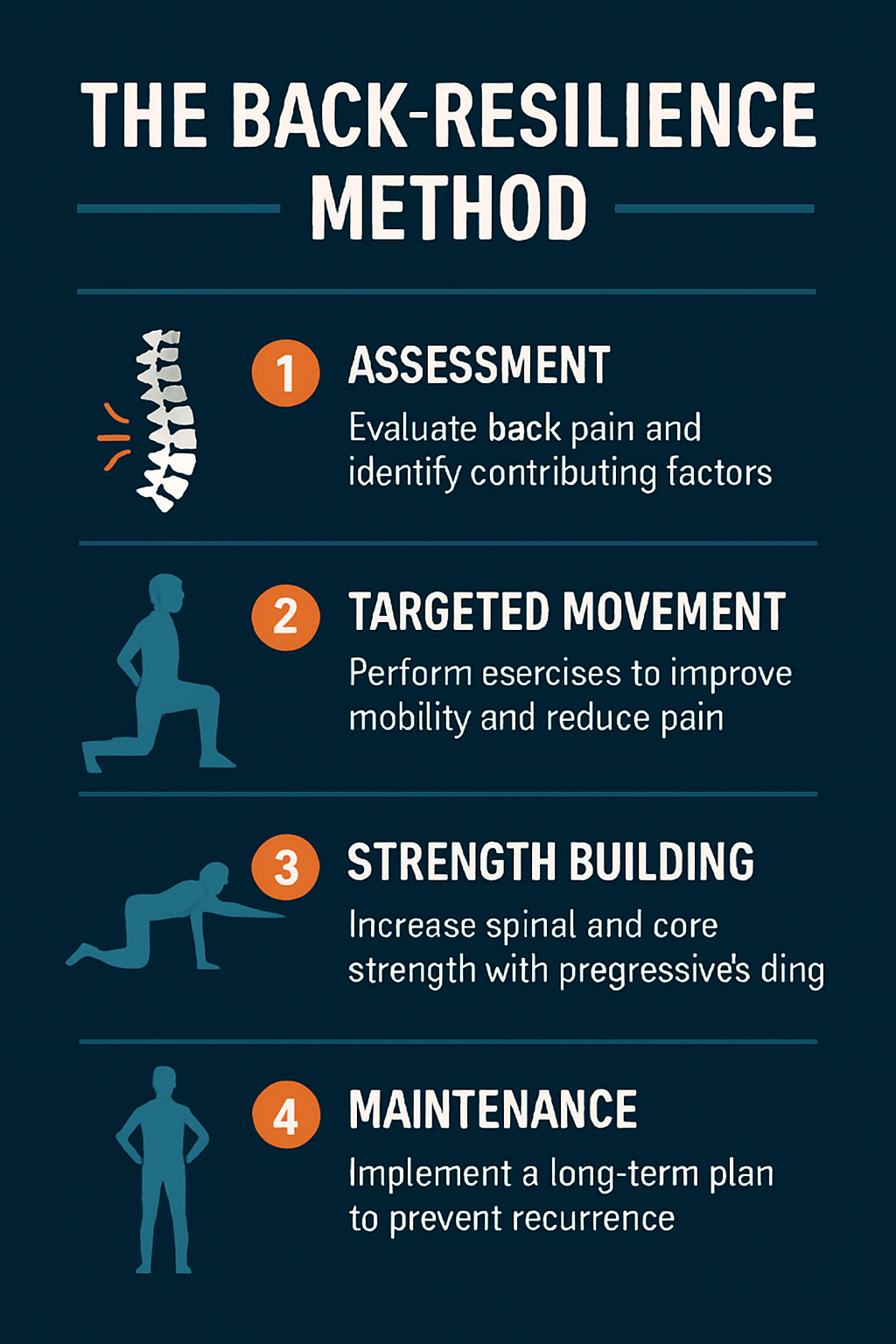
The Back-Resilience Method integrates the best available scientific evidence into a comprehensive approach to back pain management. Key scientific principles incorporated include:
- Biomechanical optimization: Identifying and correcting dysfunctional movement patterns that contribute to tissue stress and pain.
- Neuromuscular re-education: Retraining the nervous system to activate the right muscles at the right time, improving movement quality and reducing pain.
- Progressive loading: Gradually increasing the demands on tissues to build strength and resilience, based on the principle of tissue adaptation.
- Pain neuroscience education: Helping clients understand the complex nature of pain, reducing fear and catastrophizing while increasing confidence in movement.
- Biopsychosocial integration: Addressing not just the physical aspects of back pain, but also the psychological and social factors that influence pain perception and recovery.
By combining these evidence-based approaches and tailoring them to each individual's specific needs, the Back-Resilience Method offers a comprehensive solution that addresses both the symptoms and underlying causes of back pain.
Science-Based Tips for Back Health
Based on current scientific understanding, here are practical strategies you can implement to support your back health:
Movement & Exercise
- Prioritize regular physical activity—aim for at least 150 minutes of moderate activity per week
- Include specific exercises for core strength and spinal stability
- Practice good posture during daily activities
- Take movement breaks when sitting for extended periods
- Learn proper lifting techniques: bend at the knees, not the waist
Lifestyle Factors
- Maintain a healthy weight to reduce stress on your spine
- Ensure adequate sleep (7-9 hours) for tissue recovery and pain regulation
- Stay hydrated to maintain disc health
- Manage stress through mindfulness, deep breathing, or other relaxation techniques
- Optimize your workspace ergonomics
Pain Management
- Stay active, even during mild flare-ups (modify activities as needed)
- Apply heat for chronic pain or stiffness
- Use ice for acute injuries or inflammation
- Practice relaxation techniques to reduce muscle tension
- Focus on what you can do rather than limitations
When to Seek Professional Help
- Pain that persists beyond a few weeks
- Pain that radiates down your leg(s)
- Numbness, tingling, or weakness
- Pain that worsens at night or with rest
- Pain accompanied by unexplained weight loss or fever
Conclusion: Knowledge as Power
Understanding the science behind back pain empowers you to take an active role in your recovery and long-term back health. By recognizing the complex interplay of anatomical structures, movement patterns, and lifestyle factors that contribute to back pain, you can make informed decisions about your care.
The Back-Resilience Method draws on this scientific understanding to provide a comprehensive approach that addresses not just the symptoms but the underlying causes of back pain. Through personalized assessment, targeted exercises, and education, this method helps you build a stronger, more resilient back for lasting relief and improved function.
Remember that back pain is rarely a simple issue with a one-size-fits-all solution. Working with a qualified specialist who understands the science and can tailor approaches to your specific needs is often the most effective path to recovery.
Scientific References
- Hartvigsen J, et al. What low back pain is and why we need to pay attention. Lancet. 2018;391(10137):2356-2367.
- Foster NE, et al. Prevention and treatment of low back pain: evidence, challenges, and promising directions. Lancet. 2018;391(10137):2368-2383.
- Hayden JA, et al. Exercise therapy for chronic low back pain. Cochrane Database Syst Rev. 2021;9(9):CD009790.
- O'Sullivan PB, et al. Cognitive Functional Therapy: An Integrated Behavioral Approach for the Targeted Management of Disabling Low Back Pain. Phys Ther. 2018;98(5):408-423.
- Louw A, et al. The effect of neuroscience education on pain, disability, anxiety, and stress in chronic musculoskeletal pain. Arch Phys Med Rehabil. 2011;92(12):2041-2056.
- Cherkin DC, et al. Effect of Mindfulness-Based Stress Reduction vs Cognitive Behavioral Therapy or Usual Care on Back Pain and Functional Limitations in Adults With Chronic Low Back Pain: A Randomized Clinical Trial. JAMA. 2016;315(12):1240-1249.
Ready to Apply Science to Your Back Pain?
Book a consultation with Gytis Beikus to discover how the Back-Resilience Method can help you overcome back pain through evidence-based, personalized strategies.
Book Your ConsultationRelated Articles
Understanding the Back-Resilience Method: A New Approach to Back Pain
Discover how this comprehensive method addresses the root causes of back pain while building lasting strength and resilience.
Read more →